
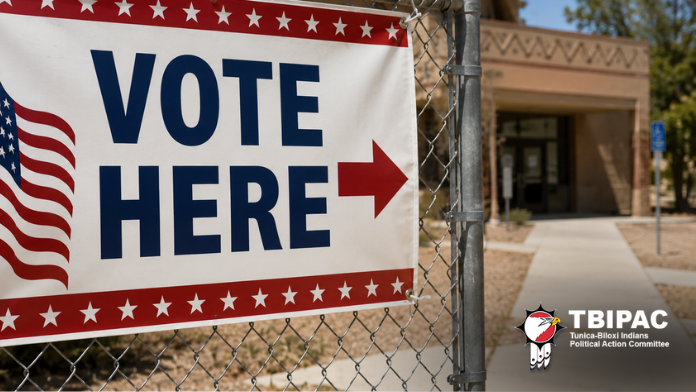
Voting rights advocates across Indian Country are closely watching a series of recent Supreme Court decisions that could reshape how Native communities protect their representation at the ballot box.
On May 18, 2026, the U.S. Supreme Court sent the case of Turtle Mountain Band of Chippewa Indians v. Howe back to the Eighth Circuit Court of Appeals for reconsideration. The case involves the Turtle Mountain Band of Chippewa Indians and the Spirit Lake Nation in North Dakota, and centers on the ability of private citizens and organizations to bring lawsuits under Section 2 of the Voting Rights Act.
The Court's action follows its decision earlier this month in Louisiana v. Callais, a ruling that significantly changed the legal standards used in Section 2 voting rights cases.
Understanding Section 2 of the Voting Rights Act
Section 2 of the Voting Rights Act is one of the nation's most important protections against racial discrimination in elections. It allows voters to challenge election systems, district maps, or voting practices that dilute the voting strength of racial and ethnic minority communities.
For decades, Native American, Black, Hispanic, and other minority communities have relied on Section 2 to challenge district maps that limited their ability to elect candidates of their choice.
Many successful Native voting rights cases have used Section 2 to improve representation in local, state, and federal elections.
What Changed in Louisiana v. Callais?
In Louisiana v. Callais, the Supreme Court established new requirements for plaintiffs bringing Section 2 claims.
According to legal analysts, the ruling now requires courts to consider whether voting patterns can be explained by partisan affiliation rather than race. The decision also directs courts to give greater weight to a state's political objectives when evaluating proposed district maps.
Voting rights advocates have expressed concern that these new standards could make future Section 2 cases more difficult to win.
Why the Turtle Mountain Case Matters
The Supreme Court did not decide the merits of the Turtle Mountain case itself. Instead, it vacated the previous Eighth Circuit ruling and instructed the lower court to reconsider the case using the framework established in Callais.
The outcome could have significant implications for Native voters throughout the Eighth Circuit, which includes several states with substantial tribal populations.
Legal advocates note that the case could help determine how Native nations and tribal citizens protect their voting rights in the years ahead.
Connection to Tribal Civic Engagement
These developments highlight the continued importance of voter education, voter registration, and civic participation efforts across Indian Country.
Organizations such as TBIPAC continue working to educate leaders and communities about the electoral process and the importance of ensuring Native voices are represented at every level of government.
While the legal landscape may evolve, civic engagement remains one of the most powerful tools available to Native communities seeking to strengthen their representation and protect their interests.
Looking Ahead
The Eighth Circuit will now reconsider the Turtle Mountain case under the Supreme Court's updated guidance.
As courts, tribes, and voting rights organizations evaluate the impact of these decisions, many observers expect the future of Section 2 litigation to remain a major topic of discussion in Native American law and policy.
The decisions serve as a reminder that voting rights remain a central issue for tribal nations and that ongoing engagement in the political process continues to play a critical role in shaping representation and governance.